Tomb of Tu Duc Hue | Entry fees and detailed solo travel guide
Visit the Tomb of Tu Duc Hue, a UNESCO site 6km from the center. Entry is $9.50. Enjoy the poetic royal architecture, lotus lakes, and rich Imperial history.
The Tomb of Tu Duc is a famous UNESCO destination, always attracting a large number of international visitors to Hue. It boasts romantic palace architecture and a picturesque landscape. This is an ideal location for foreign tourists to fully explore the history of the Nguyen Dynasty.
Overview of Tu Duc Mausoleum in Hue
For foreign tourists like myself travel to Vietnam, this is the ideal destination to experience tranquil beauty and profound depth, with the culture of the Nguyen Dynasty within the UNESCO heritage space.
#1. The historical story of Tu Duc Mausoleum
I was truly impressed to learn that the mausoleum was built amidst the turbulent historical context of 19th-century Vietnam. King Tu Duc – the longest-reigning king (36 years) – commissioned its construction in 1864 with the participation of 50,000 soldiers at the time.
The historical story of Tu Duc Mausoleum
Initially, the mausoleum was called Eternal Mechanism with the aspiration of lasting prosperity for generations to come. However, after historical events and the peasant uprising, the king changed the name to Humility.
The word “Khiem” (humility) appears in the names of all 50 large and small structures here, reflecting the king’s remorse and willingness to withdraw from the country’s difficulties.
For me, the fact that the mausoleum was chosen as the first historical site in Vietnam to be included in a 3D digital museum is particularly significant. Google Arts & Culture has proven its unique international value.
#2. Location and how to get there
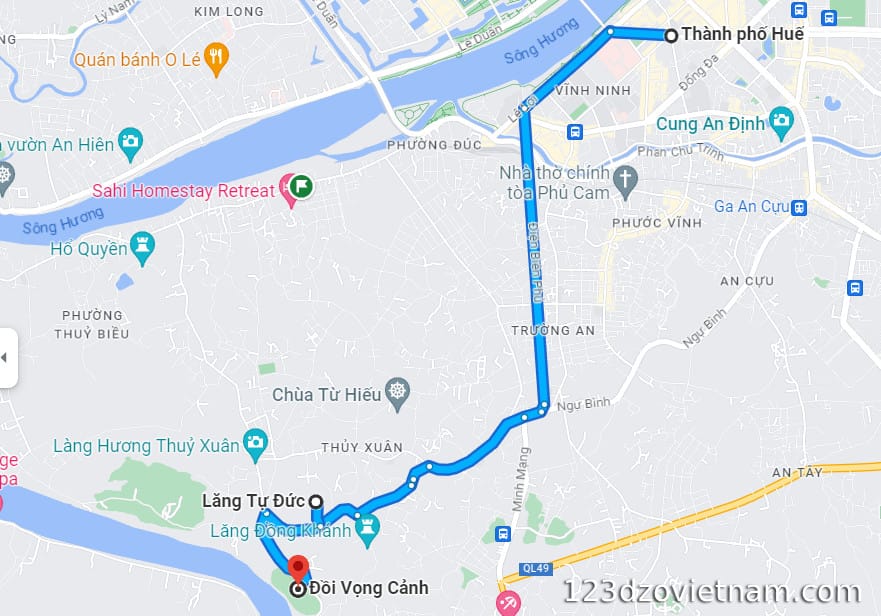
Tomb of Tu Duc Hue located just about 6 km from the center of Hue city. Located a few kilometers southwest, the mausoleum sits in a peaceful area of Thuy Ba village, Thuy Xuan ward. Based on my experience, there are three most common ways to get there:
Location and how to get there
Rent a motorbike and drive yourself: This is my favorite way due to its flexibility. Motorbike rental costs around 120,000 – 150,000 VND (~7.5 – 9.5 AUD) per day. From Hue Train Station, follow Bui Thi Xuan Street, turn onto Huyen Tran Cong Chua Street to reach the site.
Book a Grab or taxi: If you’re traveling in a large group, Grab and taxis are readily available. The cost from the city center is only about 80,000 – 100,000 VND (~5 – 6.3 AUD).
Bicycle or rickshaw: Because the distance is quite short (6 km), many of my foreign friends chose to cycle to enjoy the fresh air of Thuy Xuan suburbs, famous for its traditional incense making.
#3. Tu Duc tomb entrance fee and opening hours
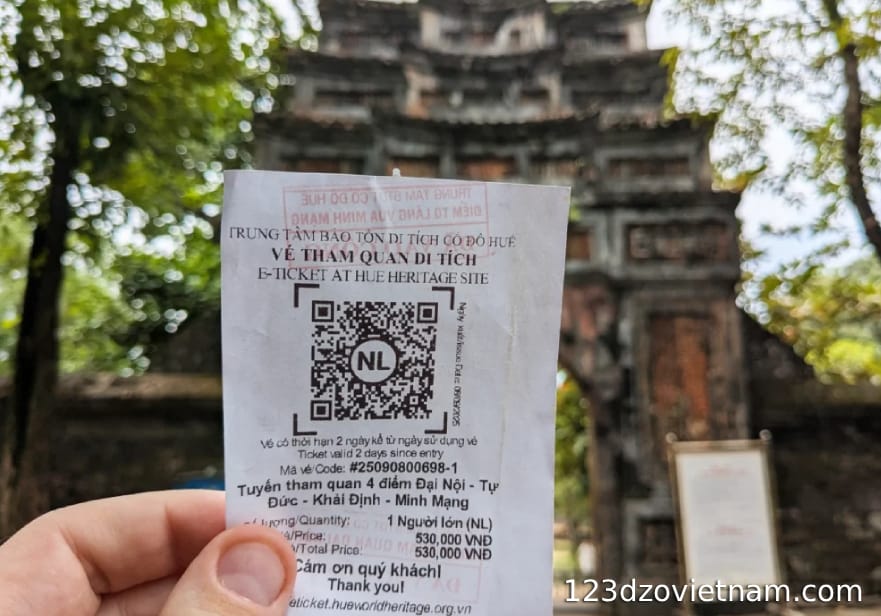
Despite being a World Heritage site, the Tu Duc Tomb entrance fee here, like at Minh Mang Tomb Hue, is extremely affordable compared to the value you receive:
Tu Duc tomb entrance fee and opening hours
Ticket prices for foreign visitors: 150,000 VND (~9.5 AUD).
Ticket prices for Vietnamese passengers: 100,000 VND (~6.3 AUD) for adults and 20,000 VND (~1.3 AUD) for children.
Opening hours: Open from 6:30 AM to 5:00 PM (summer) and from 7:00 AM to 5:00 PM (winter). I recommend visiting around January or February when the weather is cool and pleasant, allowing you to leisurely stroll and enjoy the scenery.
Unmissable experiences at the Tomb of Tu Duc Hue
If you’re seeking peace and the beauty of Hue’s imperial architecture, Tu Duc Mausoleum is an ideal place. For me, every corner feels like stepping into a slow-motion film of the Nguyen Dynasty’s glorious past.
#1. Discover the unique palace architecture
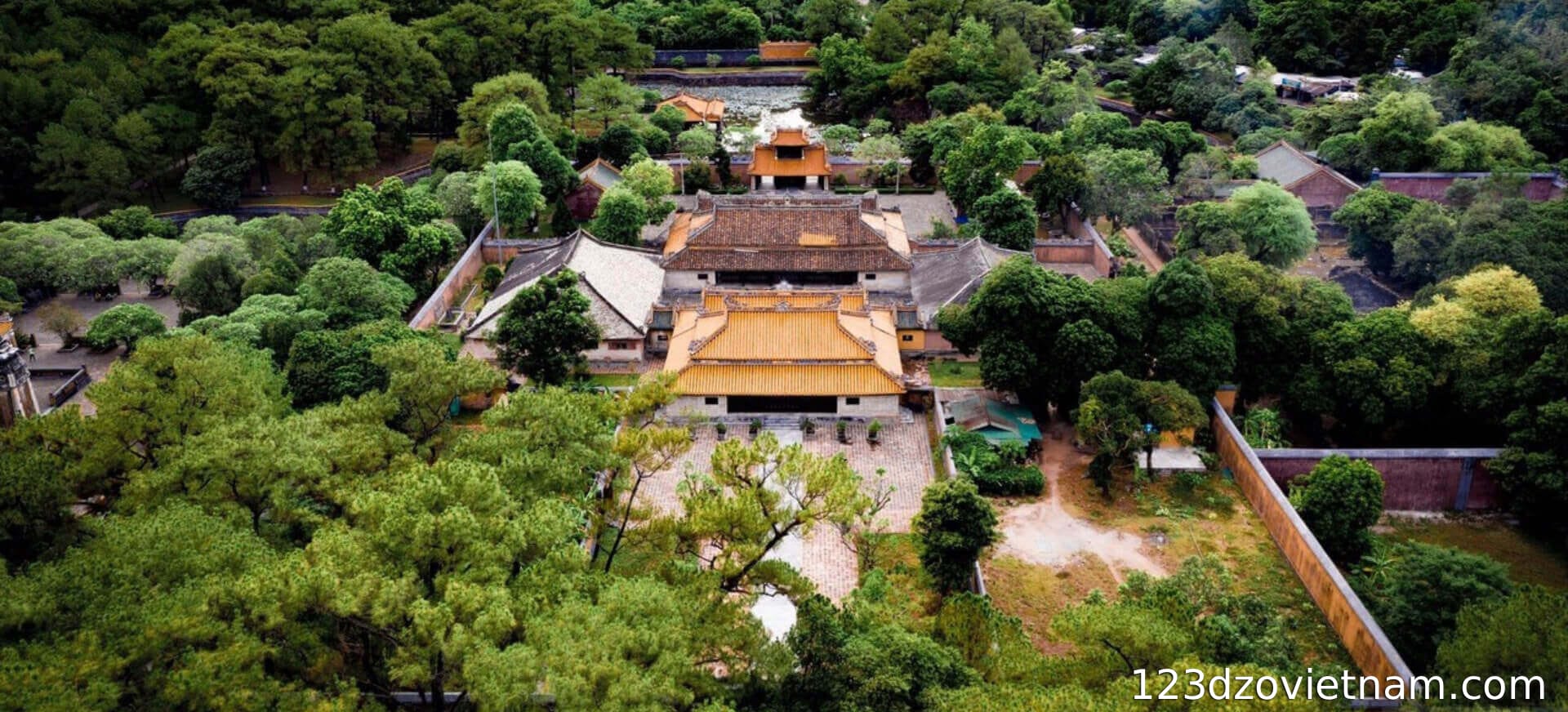
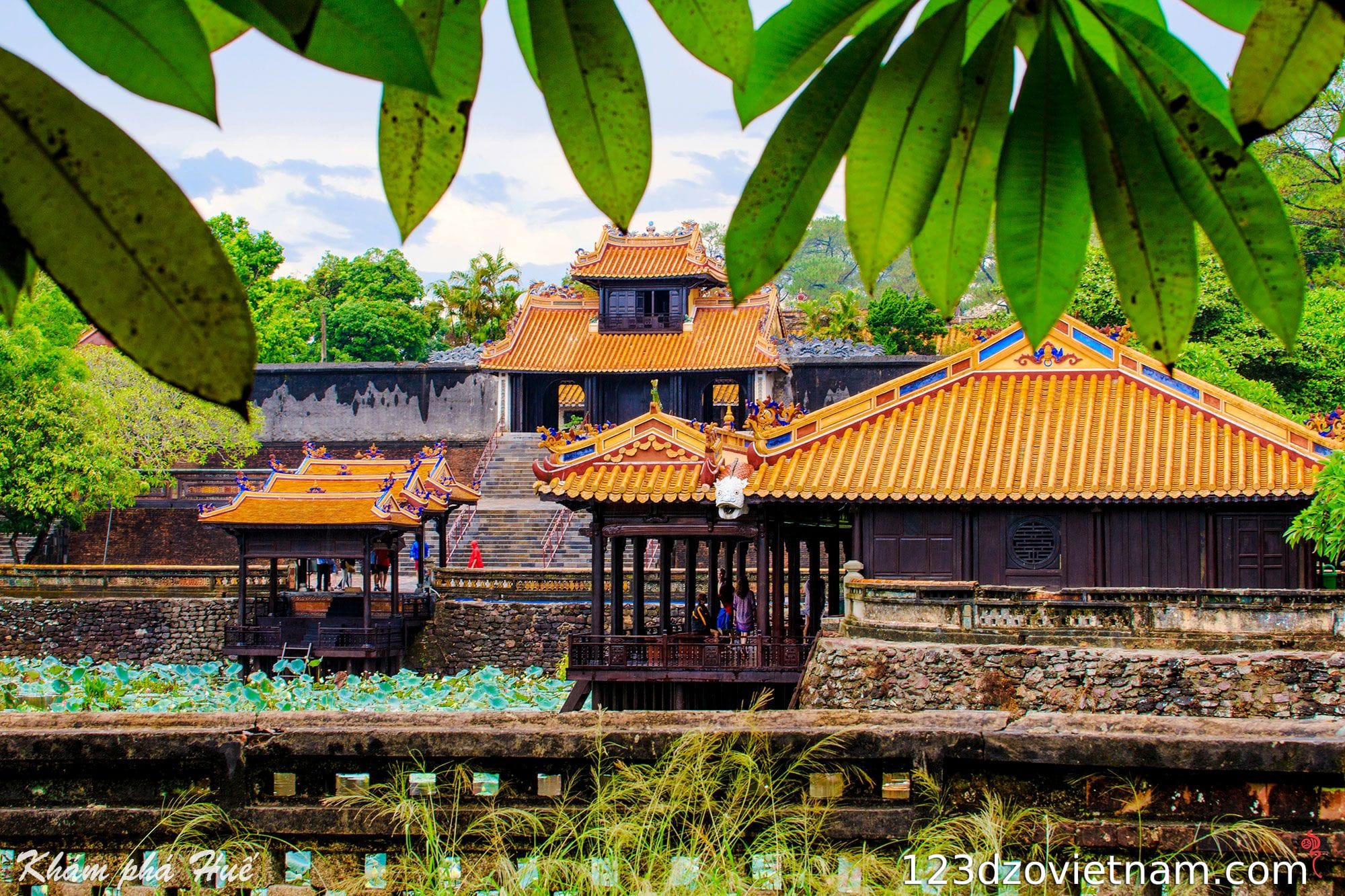
I was truly amazed when I entered this vast complex, Tu Duc Tomb Hue, which contains nearly 50 buildings of varying sizes, all bearing the word “Khiem” (humility) in their names.
Discover the unique palace architecture
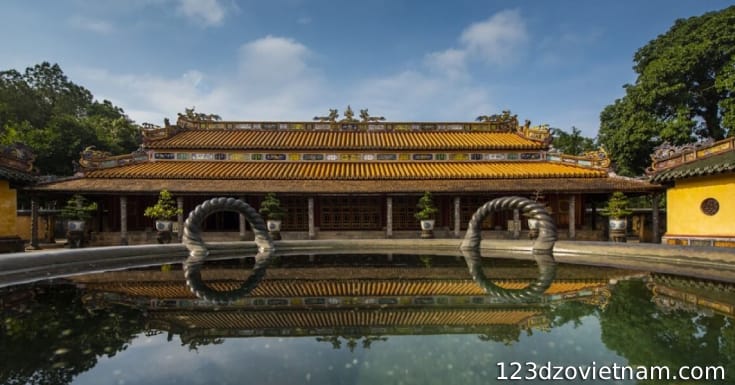
Unlike the solemn or constrained appearance often seen in other royal tombs, Tu Duc Mausoleum is built like a royal palace, where the king used to rest, work, and compose poetry.
Tu Duc Mausoleum
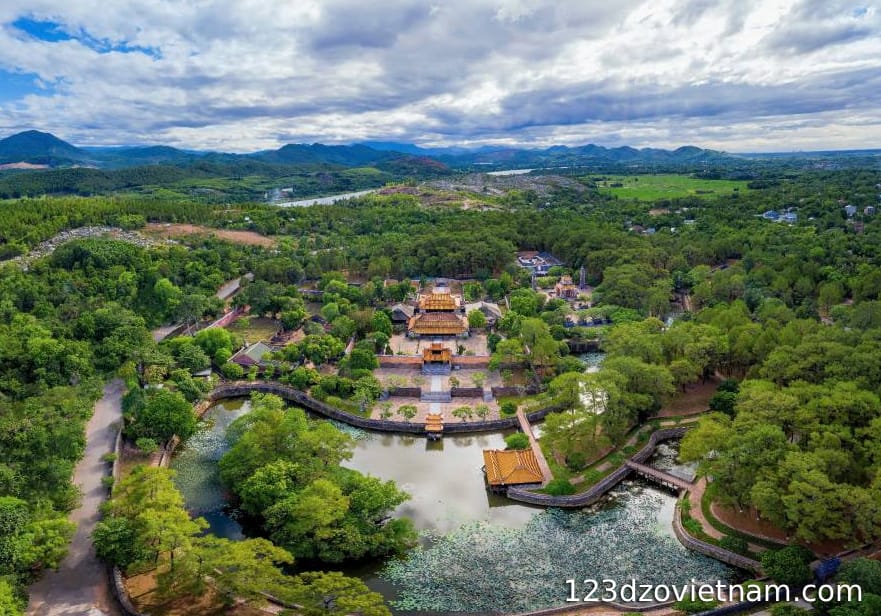
What I liked most was the way the palaces and pavilions were arranged, not along a straight axis but in gentle curves, reflecting a free and unrestrained spirit. The subtlety of the poet-king.
#2. Meditation space amidst nature
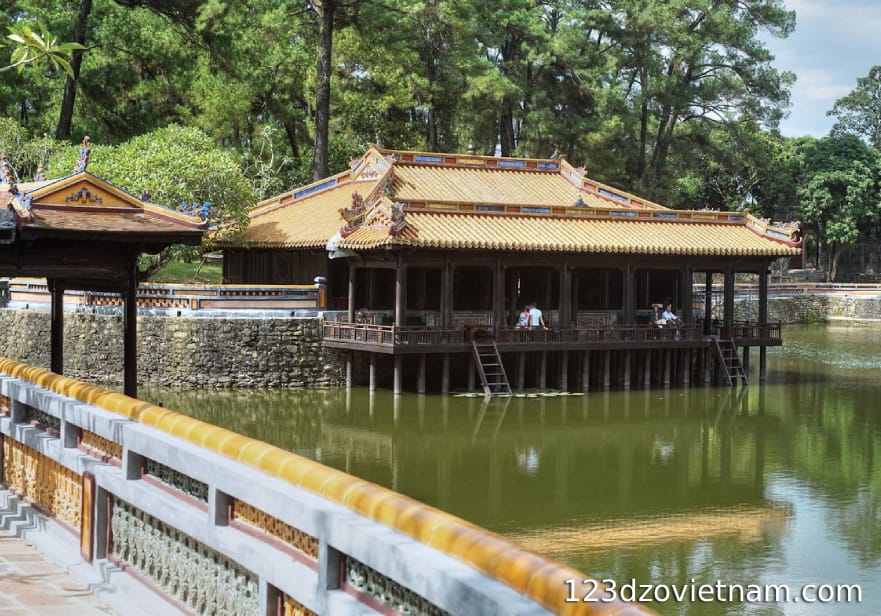
What impressed me most was the tranquil, nature-filled atmosphere of this place. I spent hours just standing by Luu Khiem Lake, admiring the blooming lotus flowers and the lush green islands in the middle of the lake.
Meditation space amidst nature
The peacefulness of the valley, combined with the rustling of pine trees and the sound of flowing water, created absolute serenity. For a nature lover like me, this is the ideal place in Hue to escape the hustle and bustle of modern life.
#3. Admire traditional art at Minh Khiem Theater
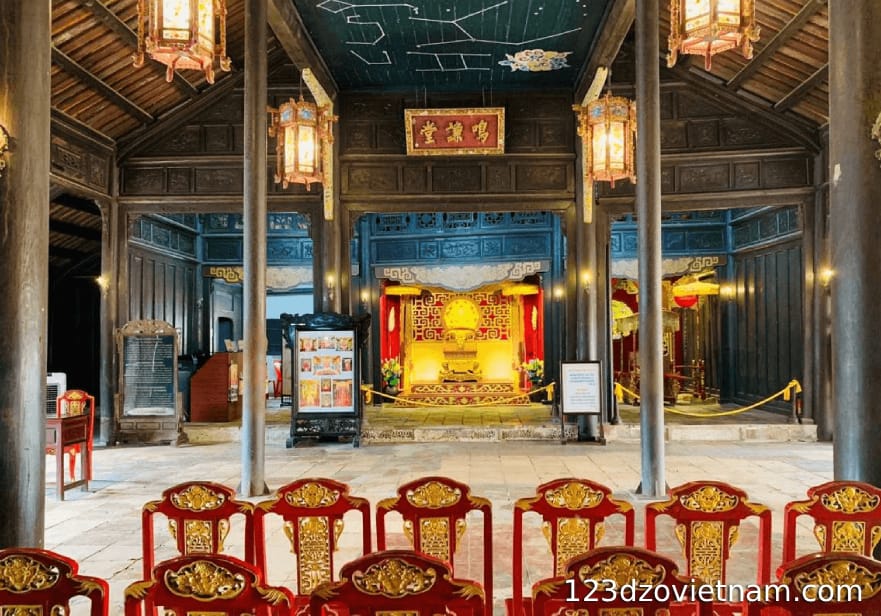
One of the most worthwhile stops, in my opinion, was the Minh Khiem Theatre, the oldest theatre in Vietnam that is still preserved. Stepping into this space, I felt as if I were in a dream. The place still retains the artistic spirit of a century ago, where Emperor Tự Đức once sat to enjoy plays and court music.
Admire traditional art at Minh Khiem Theater
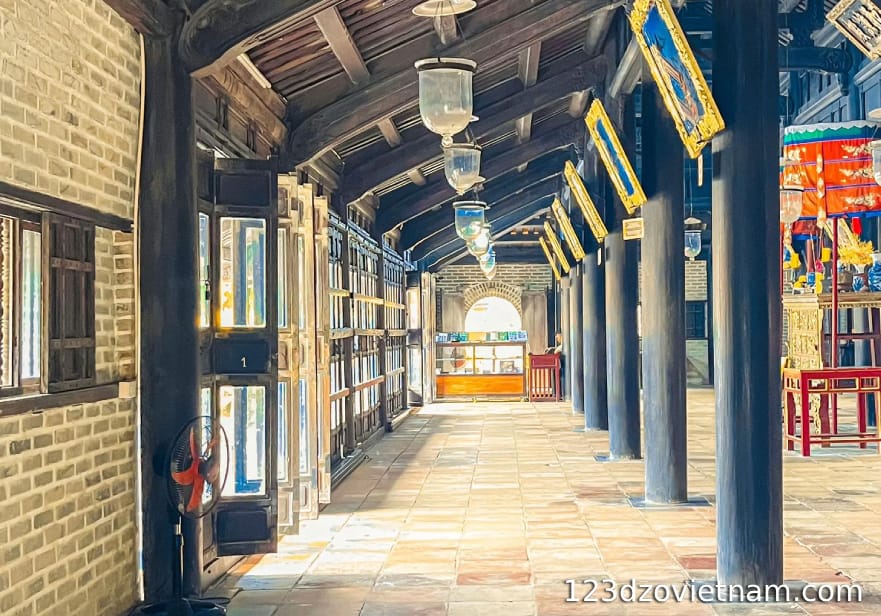
I was particularly impressed by the exquisite carvings on the wooden pillars and the reliefs bearing the strong imprint of court culture, transforming this place into a vibrant art museum in the eyes of international visitors.
03 Heritage-themed check-in spots at Tu Duc Mausoleum
If you’re a photography enthusiast visiting the city of Vietnam, Tu Duc Mausoleum is a perfect historical filming location. For travelers who love vintage beauty, these are three must-visit spots for unforgettable photos.
#1. Xung Khiem Ta and Du Khiem Ta
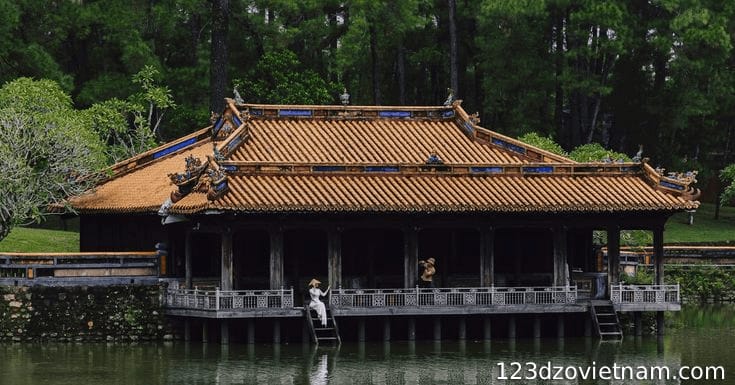
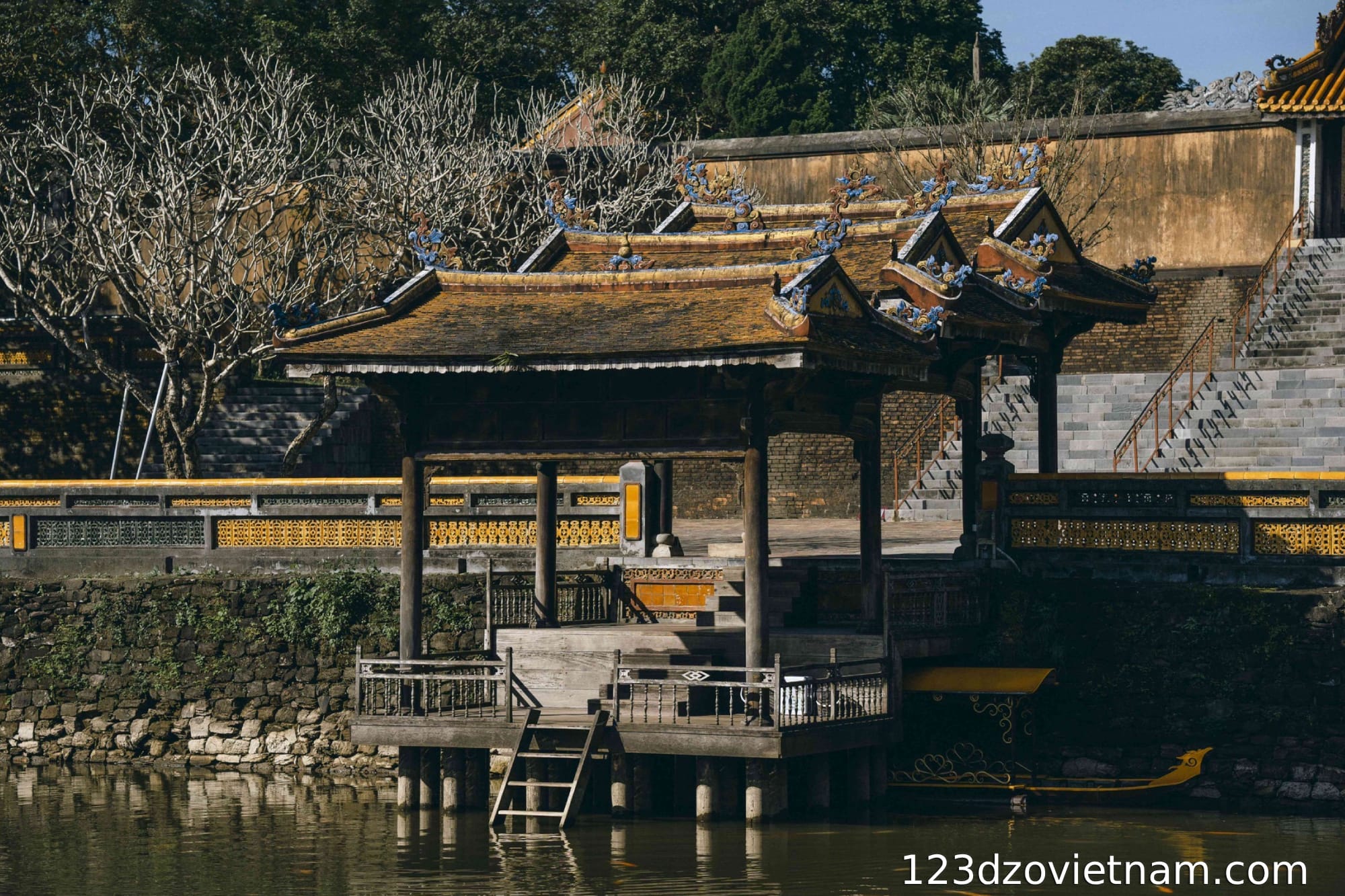
These two structures are located right next to Lake Luu Khiem and are also the most iconic photo spots at the mausoleum. My favorite is standing from a distance to capture the panoramic view of the pavilion undulating on the water’s surface, where the silhouette of the palace architecture is reflected alongside the pink lotus flowers.
Xung Khiem Ta and Du Khiem Ta
If you want a photo that looks like it’s from a bygone era at Tu Duc Tomb Hue, try sitting on the wooden steps by the lake; the picturesque scenery here will not disappoint you.
#2. Stele Pavilion area
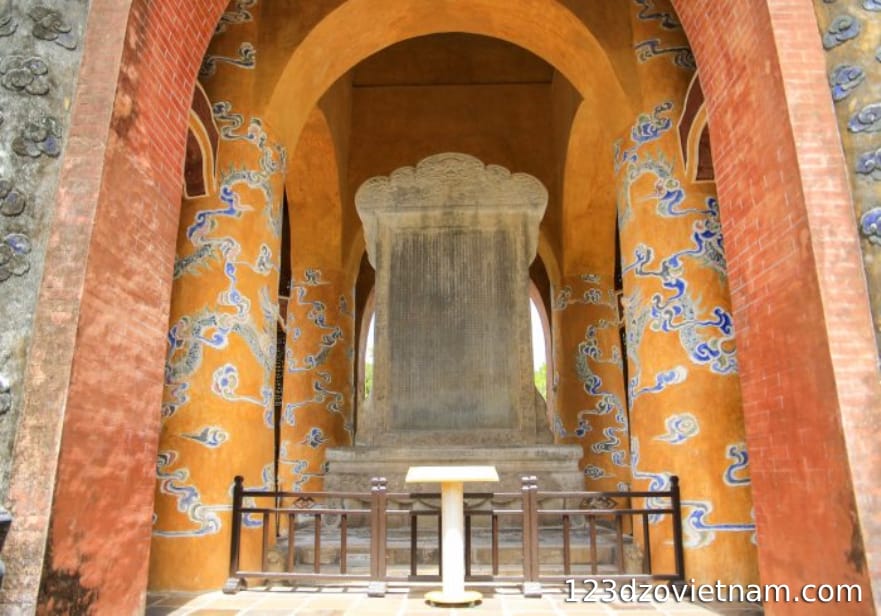
The stele house area houses the largest stone stele in Vietnam, recording the life of Emperor Tu Duc. For me, this is the most majestic and imposing photo spot in the entire mausoleum complex.
Stele Pavilion area
The giant pillars and moss-covered tiled roof create a powerful backdrop for the picture. I usually choose to shoot from below to capture the towering height of the stele house, combined with the light filtering through the ancient trees surrounding it to create a magical effect.
#3. Moss-covered walls and wooden corridors
If you appreciate simple and tranquil beauty, don’t miss the long, winding wooden corridors or the old brick walls covered in green moss. I spent a lot of time strolling through the narrow paths connecting the shrines, where patches of time’s colors lingered.
Moss-covered walls and wooden corridors
The imprint is etched on every brick. The characteristic yellow walls of the ancient capital of Hue, accented with the green of moss, are the perfect material for artistic portrait photographs.
Suggested itinerary – Attractions near Tu Duc Mausoleum
To make your trip even more fulfilling, I suggest a highly efficient combined itinerary as these locations are very close together, saving you considerable travel time. Below are some interesting stops right near Tomb of Tu Duc Hue that I often recommend to friends when they visit Hue:
Thuy Xuan incense village (1 km from the mausoleum)
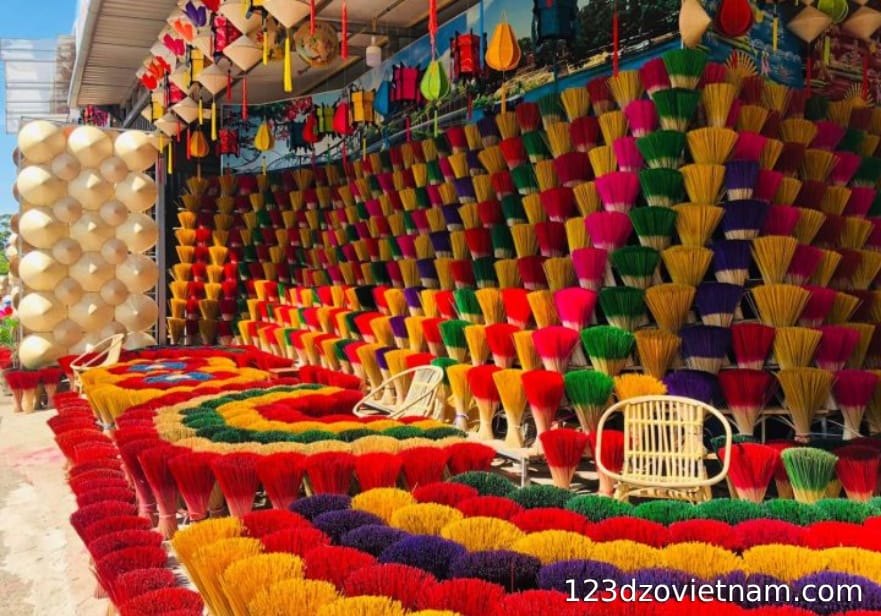
Thuy Xuan incense village (1 km from the mausoleum): Located right on the main road leading to the mausoleum, this is the most colorful stop. I chose to visit here because you can take free photos with the colorful bundles of incense and experience making incense by hand with the artisans.
Dong Khanh Mausoleum (500 m from the mausoleum)
Dong Khanh Mausoleum (500 m from the mausoleum): This spot is right next to the Tomb of Emperor Tu Duc, so you can easily walk there. I suggest this spot because of the interesting contrast between the traditional palace architecture of Emperor Tu Duc’s tomb and the modern, somewhat French-influenced style of the Tomb of Emperor Đồng Khánh.
Enjoy the local cuisine (within a 1 km radius)
Enjoy the local cuisine (within a 1 km radius): The area around the mausoleum has many stalls selling banh loc, banh beo, and specialty salted coffee. I often choose to stop here because the prices are very cheap, only about 30,000 – 50,000 VND (~1.9 – 3.1 AUD). It’s extremely convenient for refueling after sightseeing.
05 tips for a complete visit to Tu Duc Mausoleum
To ensure a smooth trip at the Tomb of Emperor Tu Duc, I’ve compiled five practical tips. These notes help you enjoy the site while maintaining proper etiquette.
Tips for a complete visit to Tu Duc Mausoleum
Respectful attire: You should wear long pants or a skirt that covers your knees and a shirt with sleeves to show respect for the king’s resting place. Avoid short or revealing clothing, as this is a mandatory rule at Hue’s historical sites.
Prepare sun protection: The mausoleum grounds are very large and involve a lot of outdoor walking, so I always bring a hat or umbrella. Don’t forget to apply sunscreen to protect your skin from the intense sun typical of Central Vietnam.
Maintain a quiet environment: I always walk softly and speak quietly to immerse myself in the tranquil, meditative atmosphere of the valley. Maintaining order allows you to appreciate the beauty of the heritage more deeply and avoid disturbing others.
Bring your own water: Walking around and exploring nearly 50 large and small structures will be quite tiring and exhausting. I recommend preparing a small bottle of water in your bag because there aren’t many places selling drinks inside the mausoleum.
Follow photography regulations: Pay close attention to the signs, as some areas inside the shrine prohibit photography to protect the artifacts. I always ask the staff before using specialized equipment like drones.
Conclusion
The Tomb of Tu Duc Hue is a highlight of my journey in Hue, featuring unique palace architecture and a peaceful landscape. Its moss-covered beauty and rich historical depth create a poetic atmosphere, making it a memorable UNESCO heritage site that leaves lasting impressions.