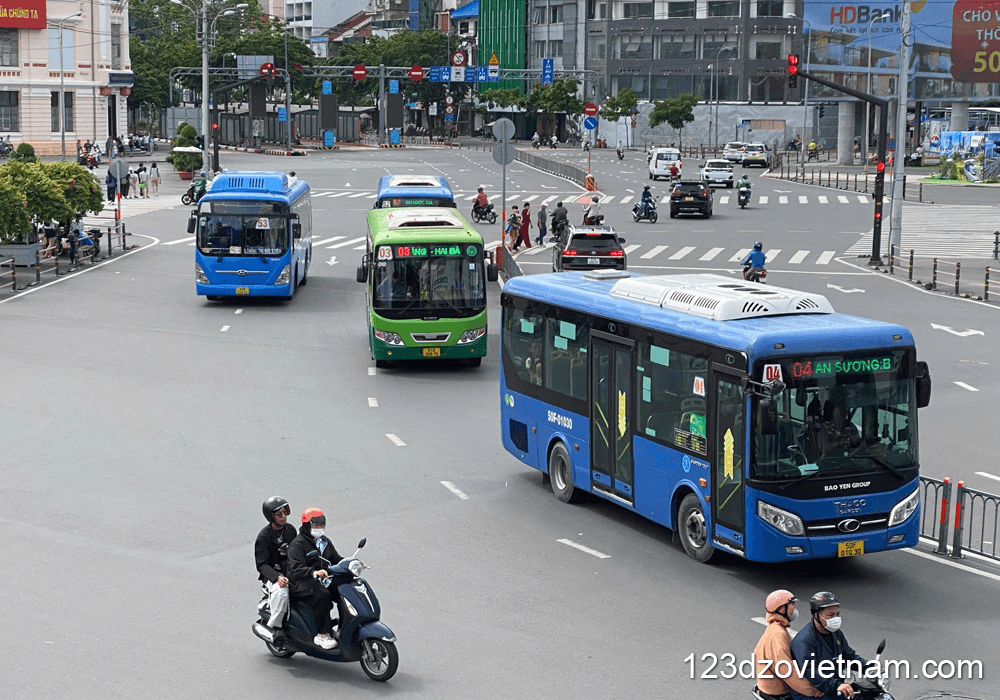
How to take bus in Ho Chi Minh City – 6 steps route to pay
How to take bus in Ho Chi Minh city is simple in 6 steps: find start and end points, choose the right route, wait at the stop, board, pay cash or card, and get off.
Experiencing buses in Ho Chi Minh City for the first time was surprisingly easy. Knowing how to take bus in Ho Chi Minh City makes travel simple, just check the route and wave at the bus. Even when crowded, the service is reliable, affordable, and perfect for travel Vietnam using public transports.
Bus fares in Ho Chi Minh City and how to pay
One of the most impressive things about buses in Ho Chi Minh City is the extremely low fares, especially when converted to Australian dollars.
Bus fares in Ho Chi Minh City and how to pay
Regular routes under 18km cost 5,000 VND (~0.27 AUD) per passenger, while routes over 18km are 6,000 VND (~0.32 AUD). Some special routes, like 13 and 94, charge 7,000 VND (~0.38 AUD), and route 96 (to the airport) costs 10,000 VND (~0.54 AUD). Students only pay 2,000 VND (~0.11 AUD) per ride.
Payment is usually done in cash, but many modern or electric buses also support QR code scanning, e-wallets, or contactless cards. Knowing how to pay bus in Ho Chi Minh City ensures you’re ready and don’t hold up the line.
Guide to how to take bus in Ho Chi Minh city and important tip
Navigating buses in Ho Chi Minh City can initially feel overwhelming due to busy traffic and a diverse network. However, after personally traveling from Ben Thanh Market (District 1) to Tan Son Nhat Airport, it’s clear that following each step carefully makes it simple, budget-friendly, and even fun.
Step 1: Identify your start and end points
Before heading out to catch a bus, I spend a few minutes accurately identifying my starting point and destination, including street names, districts, and specific locations on the map.
Identify your start and end points
In Ho Chi Minh City, many bus routes run in both directions on the same road or have stops located opposite each other, so if you don’t clearly identify the direction, you can easily catch the wrong bus going in the wrong direction.
I usually open Google Maps, turn on GPS to see my exact location, then enter my destination so the system can suggest bus routes.
Note: Always check the direction of travel of the route before going to the stop, because standing on the wrong side of the road can double your journey time.
Step 2: Check the correct bus route
After knowing your starting and ending points, the next important step is identifying the correct bus route. I use Google Maps or the Ho Chi Minh City BusMap app to look up routes. These apps provide quite detailed information such as: route number, which roads it passes through, estimated waiting time, and the nearest drop-off point.
Check the correct bus route
For example, when going from the city center to the airport, I find routes 109 or 152 to be popular choices. The app also displays the total travel time and the number of stops to pass, helping me to be more proactive.
Note: Carefully check the names of the drop-off points as some have very similar names; it’s best to track the location directly on the map while the bus is moving.
Step 3: Head to the bus stop
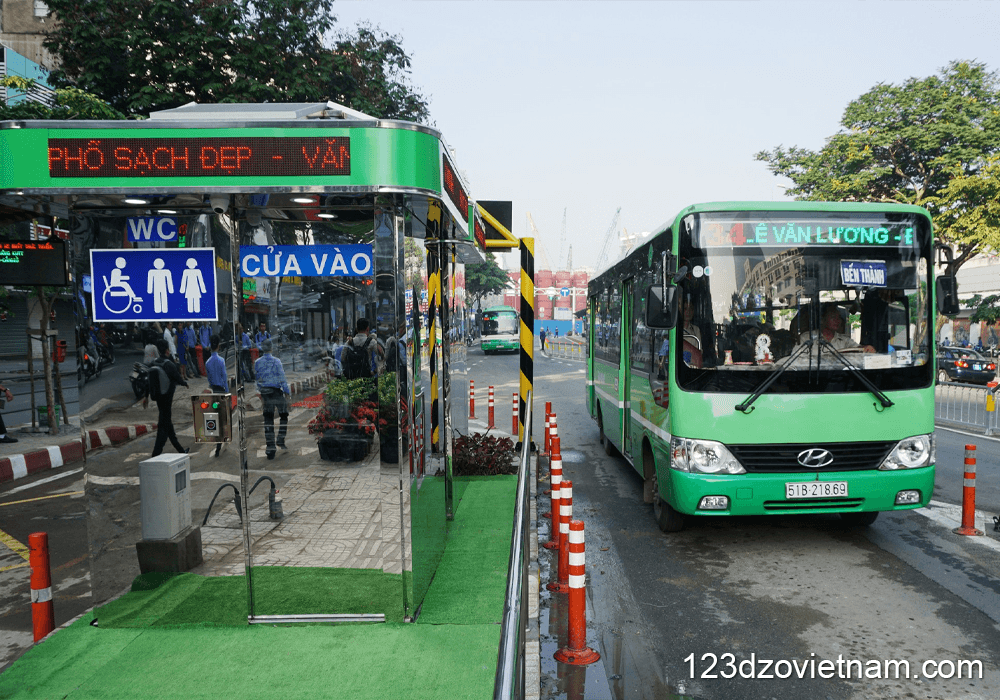
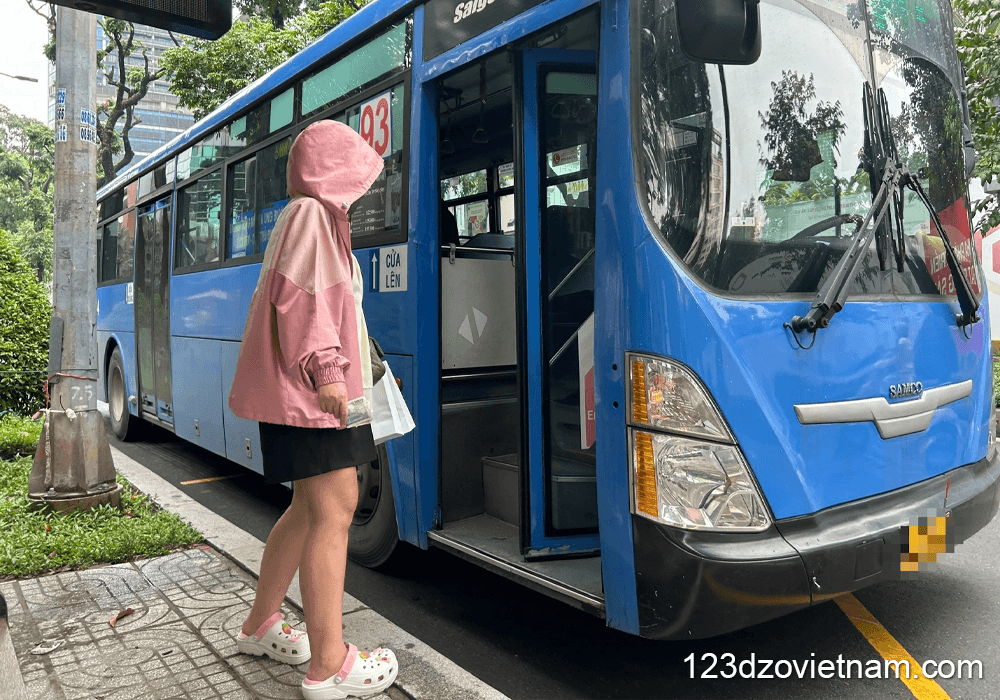
After identifying the correct route, I walked to the nearest bus stop following the instructions on the app. Bus stops usually have a green sign that says “Bus Stop” and a list of the routes that stop there. However, not all stops have electronic displays showing arrival times, so you need to actively observe.
Head to the bus stop
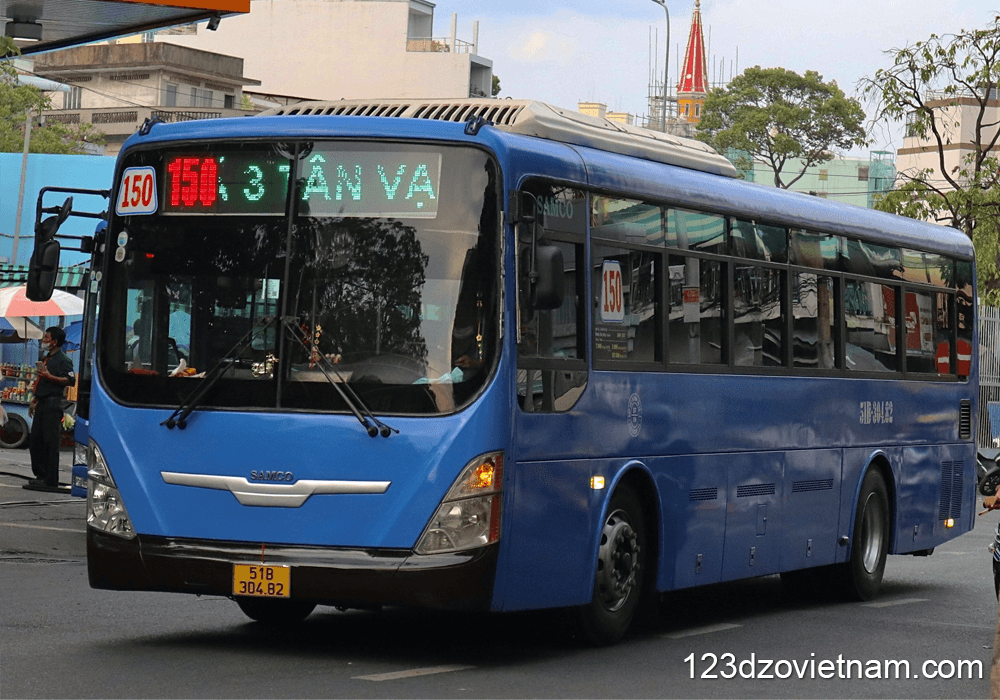
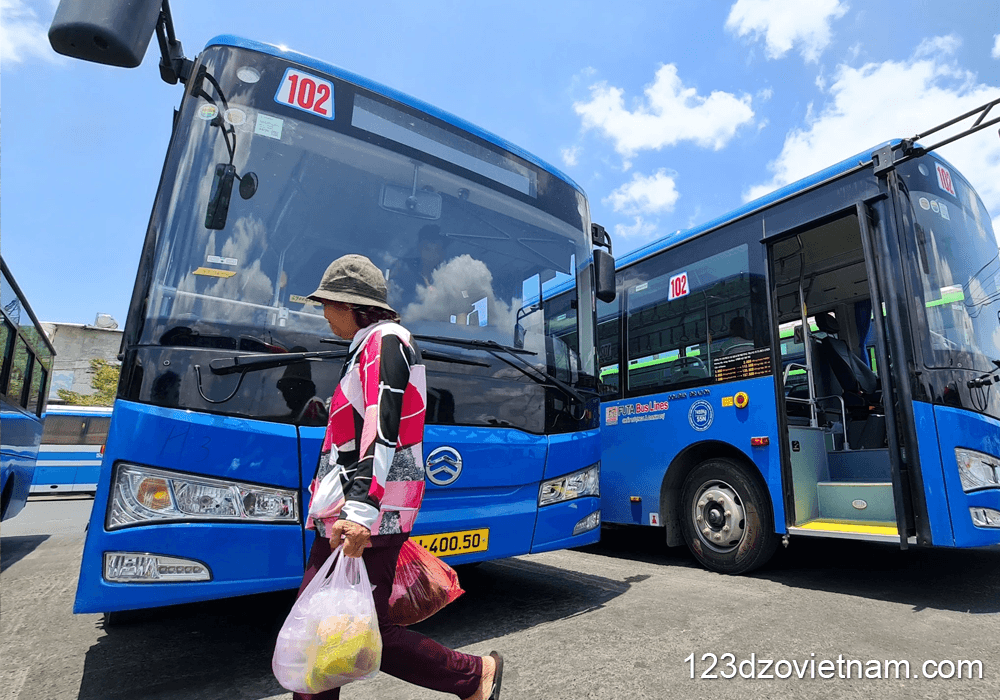
When the bus approaches, you must carefully look at the route number displayed on the front of the bus to make sure it’s the one you need to take.
In Ho Chi Minh City, buses don’t always stop automatically unless someone signals. When you see the correct route, you should step closer to the curb and wave to let the driver know there are passengers on board.
Step 4: Board properly
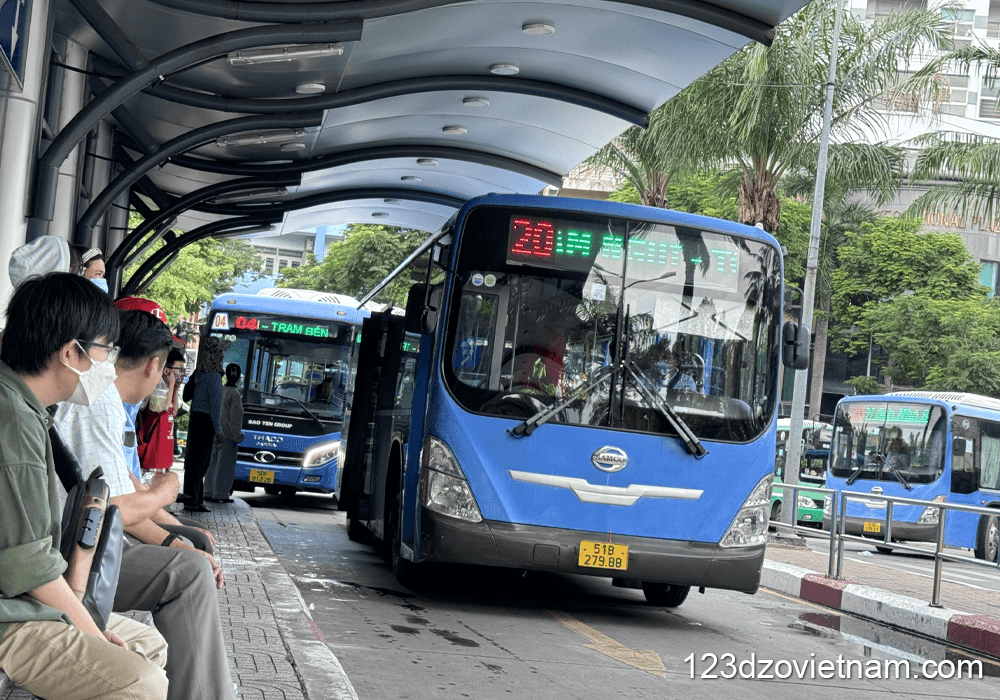
When the bus stopped, I quickly boarded and moved to the inside to make way for passengers behind me. Compared to Australia, I found boarding in Ho Chi Minh City more flexible and faster, as buses usually only stop for short periods.
Board properly
During peak hours (morning and late afternoon), buses can be quite crowded and a bit cramped, especially on central routes. Outside of peak hours, the space is more comfortable and seating is readily available.
Note:
If the bus is crowded, wear your backpack in front to avoid collisions.
Always hold onto the handrail as the bus may brake suddenly due to heavy traffic.
Giving up your seat to the elderly or pregnant women is quite common here.
Step 5: Buy your ticket and notify your stop
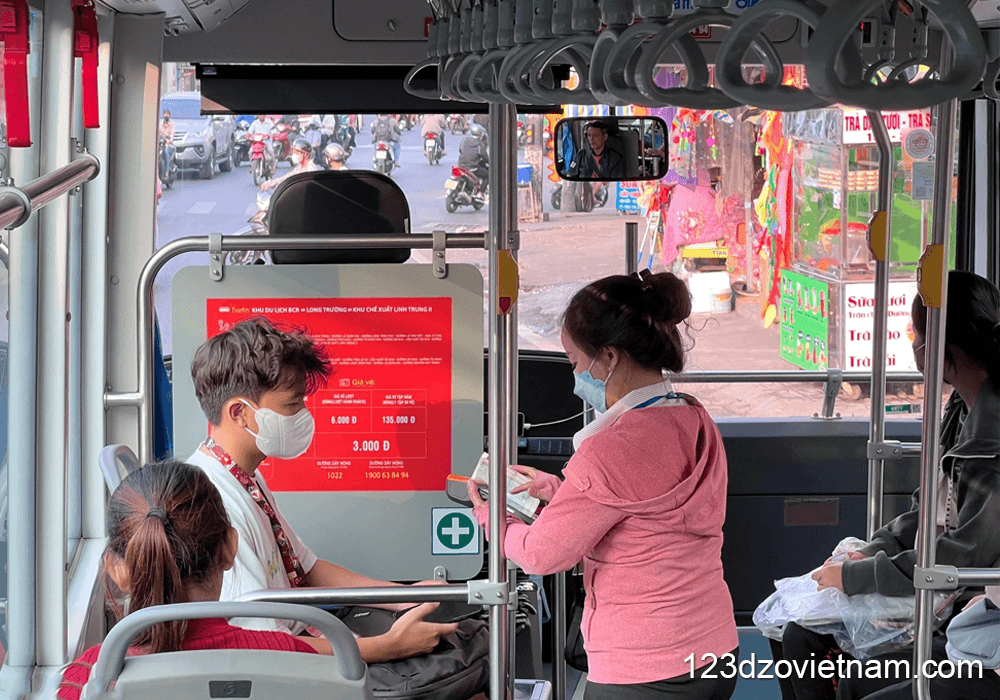
After settling, a conductor will collect cash and issue a ticket. Cash is common, but some buses allow QR code, e-wallet, or contactless payments. Fares:
Buy your ticket and notify your stop
<18km: 5,000 VND (~0.27 AUD)
>18km: 6,000 VND (~0.32 AUD)
Routes 13 & 94: 7,000 VND (~0.38 AUD)
Route 96: 10,000 VND (~0.54 AUD)
Tip: Keep your ticket until the end and tell the conductor your stop if unsure. This also relates to how to book buses in Vietnam and knowing the best website to book buses in Vietnam if you plan multiple trips.
Step 6: Get off safely
When approaching your stop (about 1-2 stops ahead), proactively press the stop button, usually the red button near the door or on the handrail. If unsure if you’ve arrived at the correct stop, check the location on Google Maps to avoid getting off at the wrong stop.
Get off safely
When the bus stops, passengers usually get off at the back door to avoid obstructing those boarding at the front. I carefully observe the surrounding motorbikes before getting off because traffic is quite heavy and close to the curb.
Note: Prepare to move to the front door before the bus comes to a complete stop to avoid rushing.
Types of Buses in Ho Chi Minh City
The public transportation system in Ho Chi Minh City is currently quite diverse, serving everything from the daily commutes of residents to sightseeing and airport transfers for tourists. Below is a table summarizing popular bus types, with example routes and estimated fares:
5,000–6,000 VND (~0.27–0.32 AUD), students 2,000 VND (~0.11 AUD)
Affordable for locals & tourists
Electric buses connecting Metro
Metro connectivity
153–169, 156 (Ben Xe Sai Gon – Hoa Hung Station)
5,000–6,000 VND
Clean, quiet, eco-friendly
Airport buses
Airport transfers
109, 152
10,000 VND (~0.54 AUD)
Convenient & cheaper than taxi
2-story city tour buses
Tourism
Ben Thanh, Nguyen Hue, Bach Dang, Independence Palace
Higher than normal buses
Hop-on Hop-off, guided tours
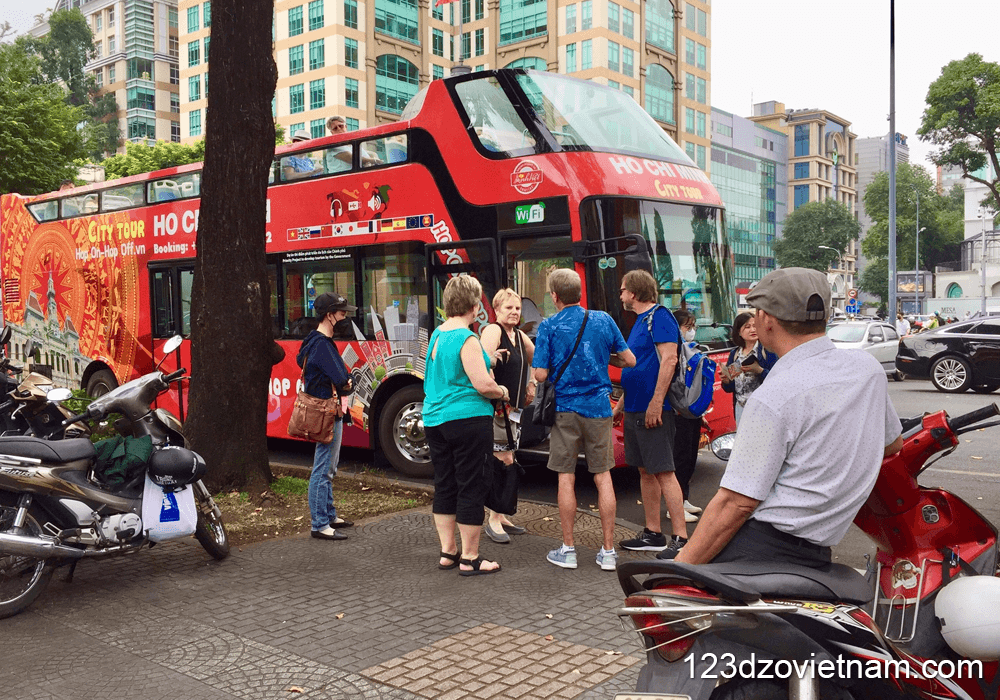
From personal experience, regular buses are the cheapest and efficient. Electric buses are modern and quiet, airport buses are convenient for luggage, and 2-story buses are ideal for sightseeing.
Conclusion
The bus system in Ho Chi Minh City is diverse, cheap, and suitable for locals and tourists alike. Even during peak hours, planning your route makes travel easy. Following this guide, you’ll know exactly how to take bus in Ho Chi Minh City while enjoying an authentic local experience using public transports during your travel Vietnam adventure.