Hoi An old town tourist map through 10 places I experienced
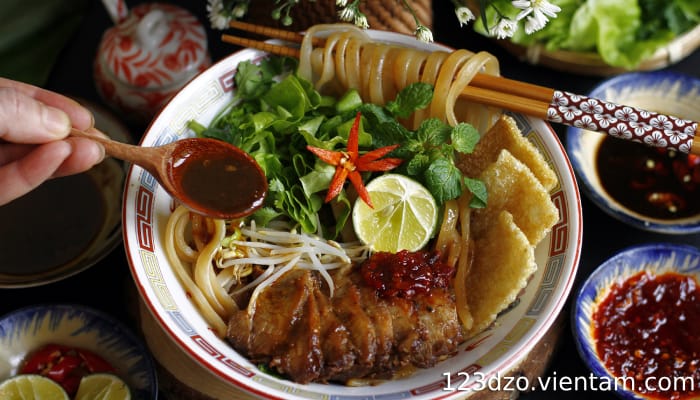
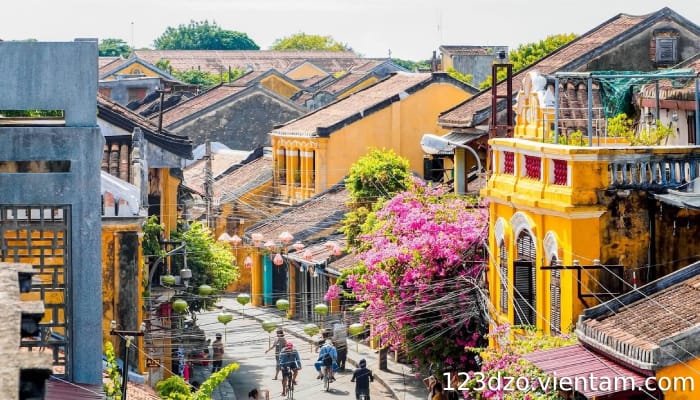
I had an unforgettable trip in Hoi An, following the Hoi An old town tourist map, I walked along the ancient town shimmering with lanterns at night, the food was delicious, especially Cao Lau and Banh Mi. Walking along the Hoai River, releasing flower lanterns, and then stopping at An Bang beach felt both peaceful and romantic.
Not only does it have ancient architecture and a peaceful atmosphere, but Hoi An also brings a friendly feeling thanks to the hospitable people. I will show you the Hoi An Tourist Map to help you find the most worth-visiting destinations to make your trip to Hoi An complete.
The 10 most prominent tourist attractions when coming to Hoi An
In order to fully explore the beauty of Hoi An, I divided the trip into 2 days: one day for the ancient town with its sparkling lanterns and heritage buildings, one day to experience the craft villages, the countryside, and end at An Bang beach. This schedule helps my trip to be both gentle and not miss any prominent destinations.
Day 1: Explore Hoi An ancient town
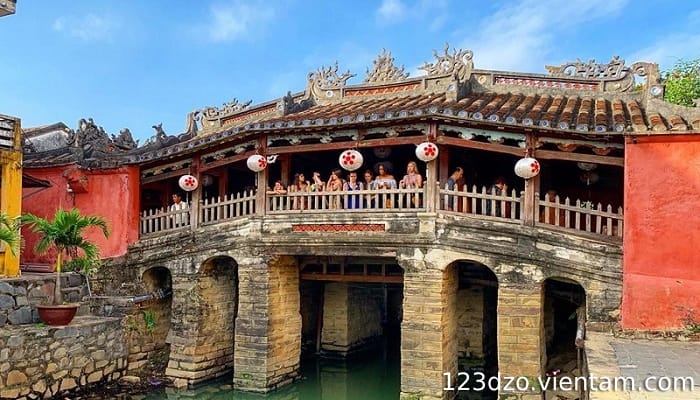
On the first day, I started the morning at the Japanese Covered Bridge, the symbol of Hoi An. Crossing the ancient wooden bridge with a tiled roof, I felt like I was going back in time to the 17th century. Immediately after, I visited Tan Ky ancient house, a house over 200 years old with a fusion of Vietnamese, Japanese, and Chinese architecture. Each door frame and each pillar here bears the mark of a once bustling trading port. On the way, I stopped at the Fujian Assembly Hall, which stands out with its bright red gate and exquisite reliefs. The atmosphere inside is solemn and sacred.
Hoi An Bridge Pagoda
At noon, I returned to the old town to enjoy a few more dishes. Using the tourist map Hoi An, I found a small local restaurant and chose Hoi An chicken rice – shredded, golden chicken served with fragrant sticky rice and Vietnamese coriander. The dish is simple, but the taste will always be remembered by me.
Cao Lau in Hoian
In the afternoon, I left the old town to visit Tra Que vegetable village. Here, I experienced the work of a real farmer: hoeing the land, watering the vegetables, and finally enjoying a rustic meal right in the garden. After that, I continued to the Thanh Ha pottery village located on the Thu Bon River. Not only did I admire the colorful pottery products, but I also tried to make a small vase myself – although not very beautiful, it was very interesting and memorable.
Cao Lau in Hoian
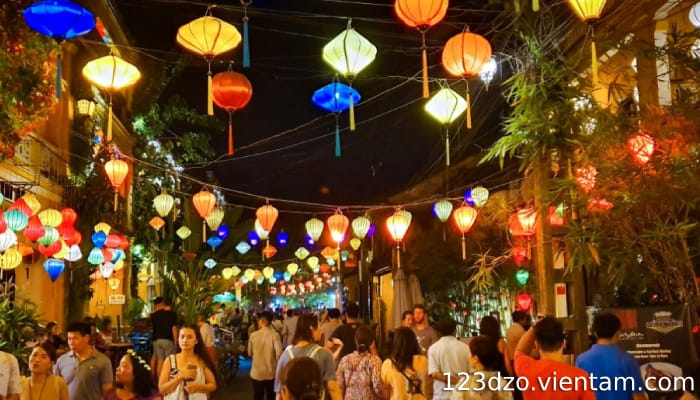
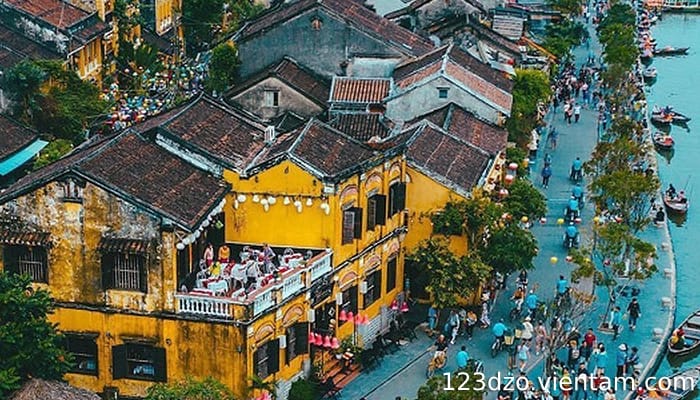
When the night fell, Hoi An seemed to put on a new, brilliant coat. I walked on the lantern street, then got on a boat on the Hoai River, released flower lanterns, and watched the shimmering lights reflecting on the water. It felt strangely peaceful, reminding me of the tranquil beauty I once felt when visiting Hue Imperial City Vietnam. Before ending the first day, I stopped by Nguyen Hoang night market to buy some souvenirs and enjoy some simple but delicious snacks.
Day 2: Craft villages – countryside – sea
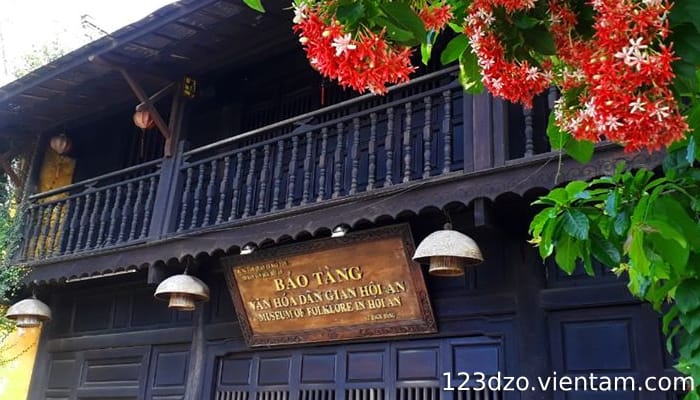
On the second day in Hoi An, I chose to start with a quiet and historically valuable space – the Museum of Trade Ceramics. This place displays many ceramic artifacts that were traded through the Hoi An trading port, from ancient blue-glazed vases to broken ceramic pieces that still bear the marks of time. Walking around the galleries, I felt like I saw again the image of a bustling Hoi An on the ancient maritime silk road.
Hoi An museum of trade ceramics
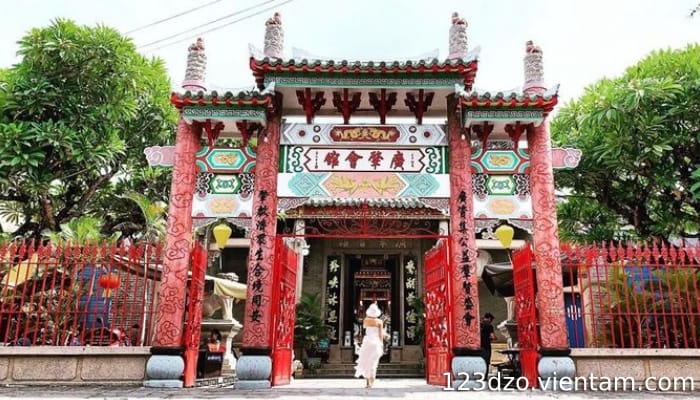
Leaving the museum, I stopped by the Guangdong Assembly Hall. Right from the gate, the building impressed me with its sophisticated carvings and vibrant colors. Inside, Quan Cong and Quan Am are worshiped; the atmosphere is solemn but also a very beautiful check-in spot thanks to the architecture imbued with Chinese style.
At noon, I returned to the old town to enjoy a few more dishes. This time, I chose Hoi An chicken rice – shredded, golden chicken served with fragrant sticky rice and Vietnamese coriander. The dish is simple, but the taste will always be remembered by me.
Cantonese assembly hall Hoi An
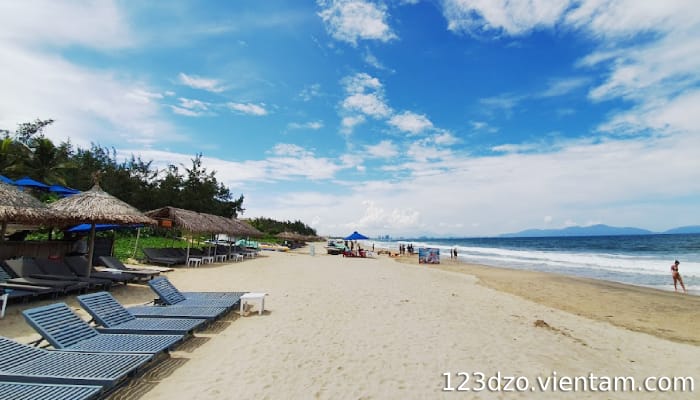
In the afternoon, I decided to spend some time enjoying the sea. From the old town, I drove about 4km to An Bang beach. The beach here is still quite wild, with clear blue water, gentle waves, and fine sand. I chose to sit at a beachside restaurant, ordered a cool coconut drink, and then let myself relax in the golden sunshine. The moment of watching the sunset over An Bang beach was truly an unforgettable highlight of this trip to Hoi An.
An Bang beach
At the end of 2 days of experience, I felt that Hoi An is not only beautiful in its ancient architecture or poetic scenery, but also in the friendliness and hospitality of the people here. I will definitely come back to discover many other interesting things.
Entrance tickets, regulations, and visiting time
When visiting Hoi An ancient town, visitors need to pay attention to the tickets and regulations. Currently, to enter the ancient town, visitors must buy an entrance ticket (VND 120,000/Vietnamese and VND 150,000/international). The ticket is valid for 24 hours and includes entry to 5 relic sites in the list of regulations. Among the 10 highlights that I have experienced, the places with mandatory tickets include: Japanese Covered Bridge, Tan Ky ancient house, Fujian Assembly Hall, Guangdong Assembly Hall, and Museum of Trade Ceramics.
Tickets regulations and visiting time
Other places such as Hoi An Market, Hoai River & Lantern Street, Tra Que Vegetable Village, Thanh Ha Pottery Village and An Bang Beach can be visited freely, only incurring experience costs such as: learning to cook in Tra Que (about 200,000-300,000 VND/person), trying to make pottery in Thanh Ha (20,000-50,000 VND/trip) or going on a boat to release flower lanterns on Hoai River (30,000-50,000 VND/small boat).
Hoi An Ancient Town opens to welcome visitors from early morning until about 9:00-10:00 pm, when the streets begin to gradually reduce activity. Tourists can go to craft villages and An Bang Beach during the day to enjoy the fresh air and avoid the harsh sunlight.
A small note is that when visiting the old town, visitors should wear polite clothes, maintain order, and not bring motorbikes or cars into the walking streets during prohibited hours (usually from 9am-11am and 3pm-9pm daily).
Hoi An old town tourist map tips for a better experience.
During my trip to Hoi An, I really felt clearly that a map is an indispensable ‘companion’. Between the small alleys, the walking streets with lanterns, and the craft villages outside the old town, having a map in hand – whether offline on the phone or printed on paper – helps me be much more proactive: not dependent on the mobile network, not worried about getting lost, and especially being able to arrange a scientific exploration itinerary. I even searched for useful travel tips on sites like 123dzovietnam to make my journey smoother. Below are the notes that I have applied and found extremely useful.
Hoi An travel tips
Bring an offline map or a printed paper: in the old town, sometimes the phone signal is weak or the battery runs out quickly because of having to take pictures continuously. I use the paper map given at the ticket counter, which is convenient to fold in a bag and allows me to see the whole view of the neighborhood.
Prioritize walking instead of driving: the old town has many small alleys, paved roads, and pedestrian streets that prohibit motorbikes during rush hours (9 am-11 am, 3 pm-9 pm). If you walk, you can easily stop at any corner to take photos, admire the architecture, or visit a roadside cafe. You can rent a bicycle to go around the old town for only 50,000 VND.
Orientation along the main roads: the first time I came to Hoi An, I often got lost, but then I realized that just by relying on the main roads, such as Tran Phu, Nguyen Thai Hoc, and Bach Dang, I could easily find my way back. The map also helps me quickly determine my position compared to the attractions.
Plan in advance and mark the destination: I circle the places I want to go, dividing them into clusters close together (for example: the cluster of Chua Cau – ancient houses – Assembly Hall in the morning, the museum – Hoi An market in the afternoon). This method saves a lot of time and effort.
A map is a must in the evening: after a boat ride releasing floating lanterns on the Hoai River, the crowded streets and the sparkling lights can easily make you lose your way. Thanks to the map, I knew the shortcut back to the hotel without having to ask too much.
After two days of exploration, I understand why Hoi An is always on the list of most favorite destinations in Vietnam. With the help of the Hoi An old town tourist map, I discovered not only the quiet old town and time-worn constructions, but also interesting daily experiences in craft villages, the countryside, and peaceful beaches. What I remember most is the moment of releasing flower lanterns on the Hoai River, when the shimmering lights blend with the laughter of tourists and the gentleness of the locals. Hoi An brings me a journey that is both peaceful and fresh. I will definitely come back to find more surprises in this ‘heritage ancient town’.