Vietnam QR code payment for foreigners – Top 4 methods guide
Vietnam QR code payment for foreigners has 4 main methods like VNPAY with international cards, Moreta Pay for tourists, local wallets, and Trust Wallet crypto.
Payment by QR code in Vietnam is extremely popular, from large restaurants to sidewalk vendors. However, as a foreign tourist, I encountered many difficulties because these codes mainly only accept domestic bank accounts or domestic e-wallets.
Situation of QR code use in Vietnam for foreign tourists
When I recently travel Vietnam, I was really overwhelmed by the QR codes that appeared a lot, from restaurants and cafes to taxis.
Situation of QR code use in Vietnam for foreign tourists
On travel forums, I also see many people claiming that QR codes can be scanned wherever they go in Vietnam, including sidewalk shops, local markets, etc. This is completely different from the fact that tourists can only pay by cash or card like a few years ago.
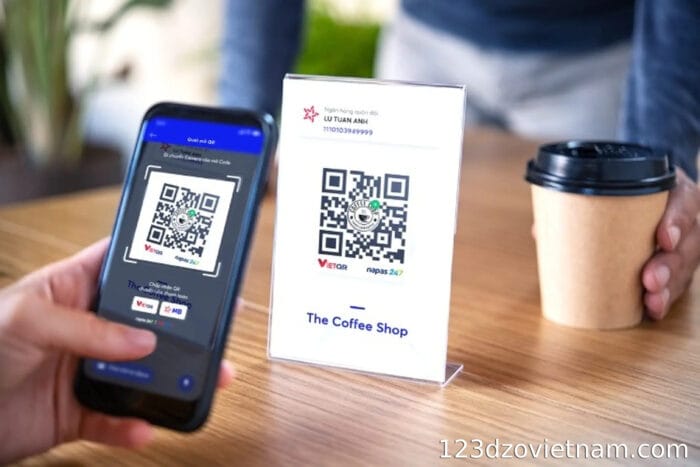
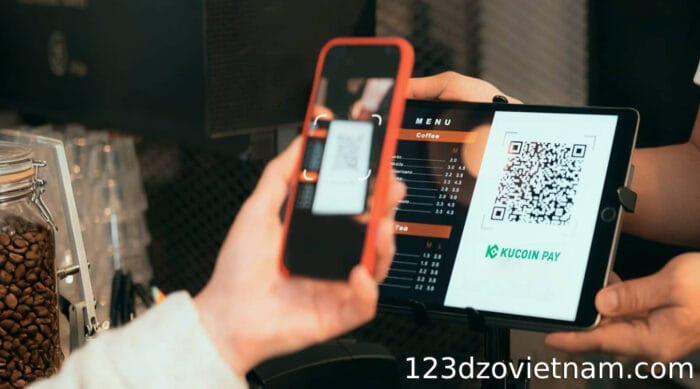
However, one reality that I noticed when experiencing payment by Vietnam QR code payment for foreigners is that QR code cannot always be used. One time, I went to a small coffee shop on Giang Vo Street, Hanoi. When I scanned the checkout code, my foreign banking application was completely helpless because the system here only accepts domestic transfers or Vietnamese e-wallets.
Vietnam QR code payment for foreigners is that QR code cannot always be used
When I did some research online, I saw quite a few tourists experiencing the same situation as me. Many people commented that this system is not really friendly to tourists. Many people complain that some stores only have QR codes and do not have POS machines to swipe Visa cards. Intermediary apps such as Moreta and Trust Wallet may encounter errors and incur transaction fees. Many tourists, unable to scan QR codes, have had to switch to using Apple Pay, swiping international cards, or keeping cash on hand.
Review 04 QR code payment methods in Vietnam that I learned
After a period of experience and exploration, I have concluded 4 payment solutions with Vietnam QR code payment for foreigners. If you do not know how to pay with QR codes in Vietnam, you can refer to the following information.
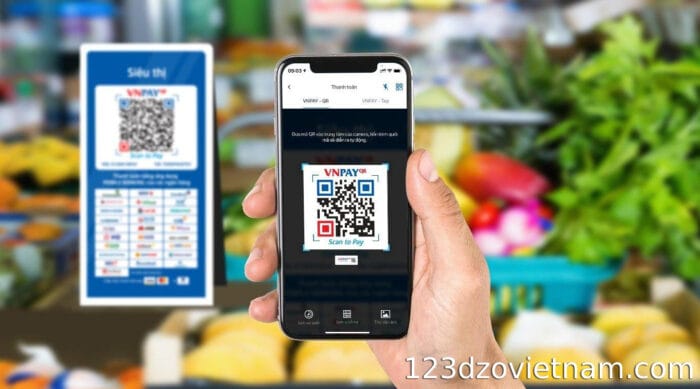
#1. VNPAY App (official solution)
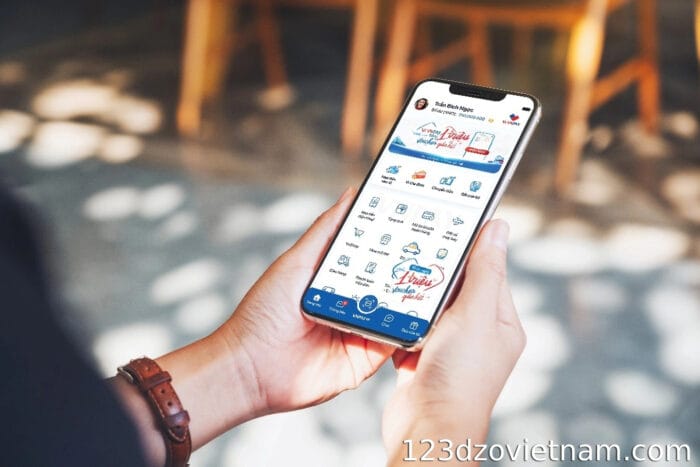
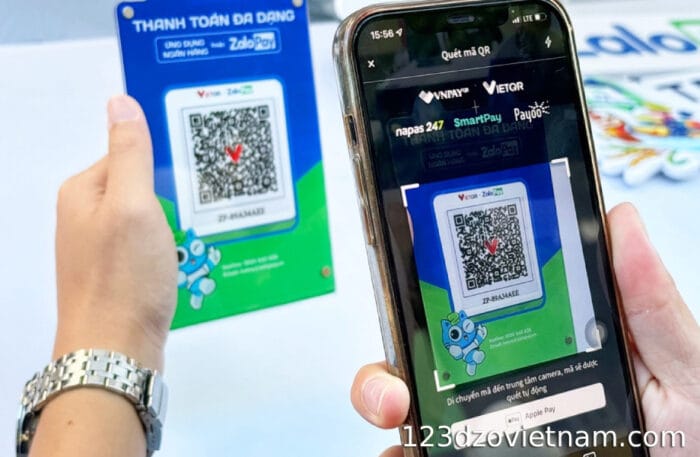
VNPAY App is a super application that allows visitors to register with an international phone number, verify their passport, and directly link Visa/Mastercard/JCB international cards to scan codes. So how to pay with QR code in Vietnam with VNPay?
VNPAY App (official solution)
With this method, you do not need a Vietnamese bank account but can use an integrated international card directly. Specifically, after authenticating your passport, you need to go to the Card Link section, select the corresponding international card type, and enter the card number, expiration date, and CVV code.
The system will perform a small transaction and ask you to enter the OTP from the card-issuing bank to complete the link. When paying, you just need to open the app, choose to scan the store’s QR, the VND amount will automatically be converted and deducted directly from the linked international card.
The system will perform a small transaction and ask you to enter the OTP
I once ate at Pho Thin Lo Duc in Hanoi, ordered a bowl of pho for 90,000 VND (~3.6 USD), and successfully scanned the VNPay QR. However, it took me nearly 4 minutes to receive the OTP code from my home bank due to network congestion. This made me feel quite annoyed because people were waiting in line behind to pay.
#2. Moreta Pay (intermediary wallet for travelers)
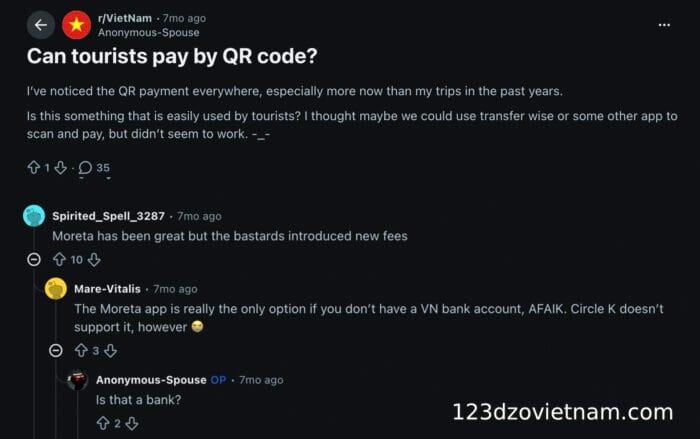
If you have a question mark about whether there is any other way to pay QR in Vietnam, Moreta Pay is the choice. This e-wallet acts as a bridge to help international cards be compatible with the VietQR system in Vietnam.
Moreta Pay (intermediary wallet for travelers)
To use this QR payment Vietnam, you need to download the app, scan the passport to authenticate, and deposit money from your visa/mastercard or international transfer to your wallet. The system will process the transaction through the international payment gateway, converting the amount of money into a VND balance in your Moreta wallet.
From there, you can quickly scan any Vietnamese domestic QR code. However, users have to pay quite high foreign currency conversion and deposit fees. Additionally, you may occasionally encounter intermittent errors.
You can quickly scan any Vietnamese domestic QR code
Before that, I visited Cong Coffee at 116 Cau Go, Hanoi, and ordered a cup of coconut coffee for 65,000 VND (~2.6 USD). Thanks to having deposited money into Moreta Pay before, I scanned the QR code quite quickly, and in just 5 seconds, the payment was completed. The only downside is that the total deposit is a bit high because I have to pay additional service fees.
#3. Domestic wallet (MoMo / ZaloPay)
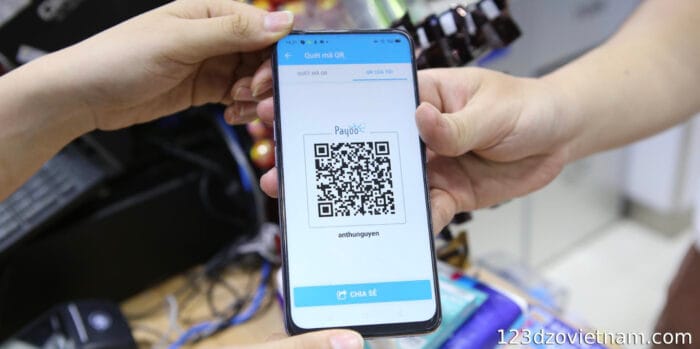
This is Vietnam’s national e-wallet group, operating based on a direct link mechanism with bank accounts or cards opened in Vietnam.
Domestic wallet (MoMo / ZaloPay)
Therefore, with this form of payment by Vietnam QR code payment for foreigners, you cannot link your country’s international cards here to scan the QR code. To use, you need a Vietnamese SIM linked to domestic banks such as Vietcombank and Techcombank. BIDV,… that you have opened before.
I discovered the form during a long business trip in Vietnam. Luckily, because of the long nature of my work, the company supported me in opening a domestic bank account in advance.
Vietnamese SIM linked to domestic banks such as Vietcombank and Techcombank
Thanks to my local account, I make payments extremely quickly and smoothly everywhere. However, if you are only traveling to Vietnam for a few days or weeks, trying to open a domestic bank card is unnecessary and quite time-consuming. Consider other options.
#4. QR crypto (Trust Wallet – emerging form)
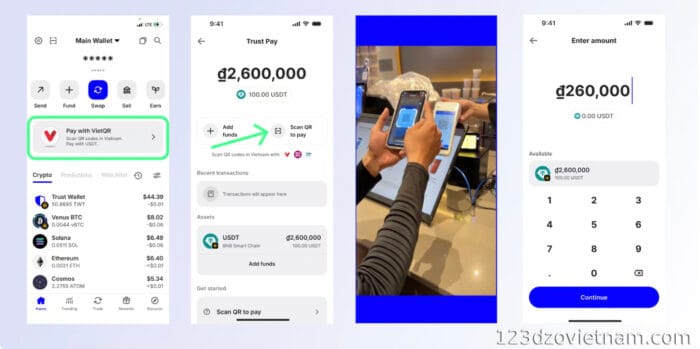
Trust Wallet allows travelers to scan QR codes and pay with cryptocurrency (like USDT) without linking to a traditional bank card. You just need to deposit cryptocurrencies (usually Stablecoins like USDT) from the exchange into your personal Trust Wallet. When paying, you open your wallet and select the QR scanning feature. The intermediary partner network system will automatically calculate the actual exchange rate, subtracting the corresponding amount of USDT from the wallet.
QR crypto (Trust Wallet – emerging form)
With this form, you do not need to go through a traditional bank and can still learn how to pay with QR code in Vietnam quite quickly. However, the form of payment with electronic money in Vietnam does not have clear legal regulations, and the number of points accepting this payment method is still quite small.
At a technology cafe in Hang Hanh alley (Hanoi), I successfully paid with Trust Wallet for a bill of 75,000 VND (~3 USD). The transaction was successful after 1 minute, but the staff seemed quite confused because they had to confirm with the shop owner whether the VND money had been returned to their account.
The form of payment with electronic money in Vietnam
After that, I called a taxi to the hotel for 65,000 VND (~2.6 USD) and offered to scan the same crypto code, but the driver immediately waved his hand and refused. At that time, I wondered can I use my Visa debit card in Vietnam. But in the end, I was forced to pay cash instead.
05 things to note when using QR code for payment in Vietnam
To have a smooth trip and not encounter funny situations when making QR payment Vietnam, you need to understand how this system operates. Below are the notes that I have drawn from my own practical experience:
05 things to note when using QR code for payment in Vietnam
Distinguishing VietQR and QR e-wallets: VietQR codes are posted at small shops that only accept transfers from domestic banks. International apps will report errors and can only scan QR codes for large systems like VNPay.
Confirm the recipient’s name before clicking to pay: in Vietnam, there are many crowded shops where it is easy for thieves to paste fake QR codes. So please ask the staff if the name displayed on the screen is the correct account for the restaurant before ending the transaction.
Always ensure a stable network connection: to scan QR codes and receive OTP from international banks, you need to make sure your phone is always connected to the network. If the signal is weak or the wifi is unstable, your transaction may be interrupted and your money will be suspended.
Calculate service fees and exchange rates in advance: if you use an intermediary travel wallet like Moreta Pay, the amount deducted from your international card will be higher than the VND invoice, so pay attention to the deposit fee and conversion fee.
Prepare some small-denomination money: local markets, sidewalk shops, and traditional taxis still prefer this form of payment. Please bring notes of 20,000 VND, 50,000 VND, 100,000 VND in case you cannot pay online.
Conclusion
Although Vietnam QR code payment for foreigners is becoming quite popular, the system still has certain barriers in terms of procedures and technology. Therefore, be flexible in combining many different forms of payment and keep a little cash in your pocket to make your trip as convenient as possible.