Is it better to exchange money in Vietnam? Best guide for AU
Is it better to exchange money in Vietnam? Vietnam offers better rates than Australia (~5–20% higher). Bring a small amount of AUD and use ATMs to save costs.
In my experience, you should avoid exchanging large sums of money abroad beforehand, as the exchange rates are typically quite unfavorable. Instead, exchange just a small amount to cover your transportation costs, and then head into the city center to exchange the rest at gold shops or banks, where you will secure a much better rate.
Should I exchange money before I travel to Vietnam? Real-world insights from travelers
If you are wondering whether or not you should exchange money before arriving in Vietnam, or asking yourself, “Is it better to exchange money in Vietnam?” then, to be honest, that was precisely the same dilemma I faced during my first travel Vietnam.
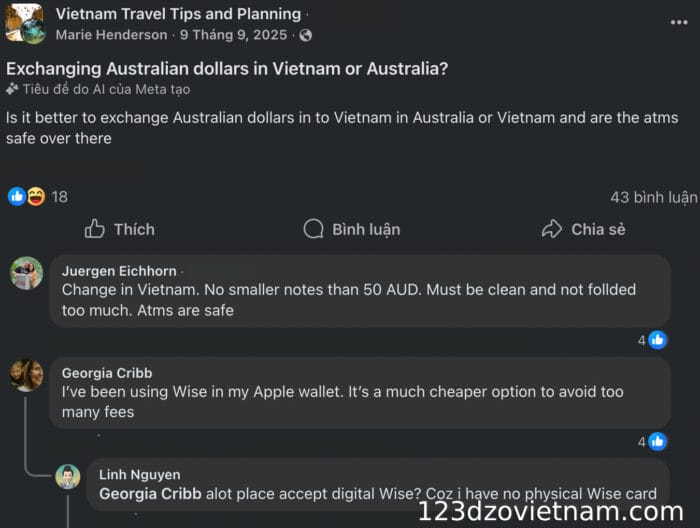
According to international travel communities, exchanging currency in Vietnam is advantageous
According to numerous accounts from the international travel community, most people agree that exchanging currency directly in Vietnam is far more advantageous than doing so in one’s home country.
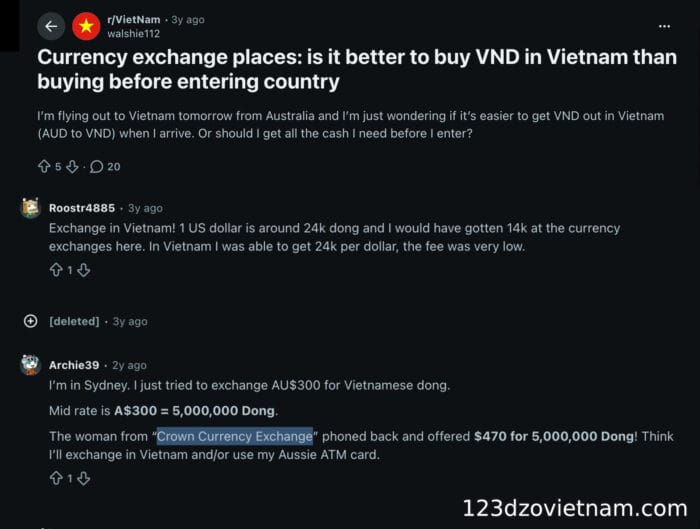
To cite a real-world example: a traveler from Sydney once shared that when they attempted to exchange 300 AUD into Vietnamese currency at a currency exchange counter in Australia, they were offered a rate yielding only about 5 million VND, whereas the actual market rate at the time should have been over 7 million VND.
Reddit user also warned that currency exchange counters often offer extremely low rates for currencies
Another Reddit user also warned that currency exchange counters, such as “Crown Currency Exchange,” often offer extremely low rates for currencies that are not widely circulated globally, such as the Vietnamese Dong (VND).
The most sensible strategy is never to exchange your entire budget in advance. I typically exchange only a small amount at the airport to cover taxi fares and purchase a SIM card; I then head into the city center to find large gold shops, where I exchange the remainder at the most favorable rates. I always ensure that my foreign currency bills are crisp and new to avoid rejection or extra fees.
How international tourists can safely exchange currency at the best rates
If you are wondering whether to exchange money in Vietnam or Australia, and how to do so while traveling in Vietnam without getting a raw deal, here are some practical tips I have gathered from my own experiences:
#1. A smart currency exchange strategy
Instead of exchanging all my funds in advance, I typically employ a “phased approach.” This strategy not only ensures security but also helps maximize the value of every Australian Dollar (AUD) converted into Vietnamese Dong (VND).
A smart currency exchange strategy
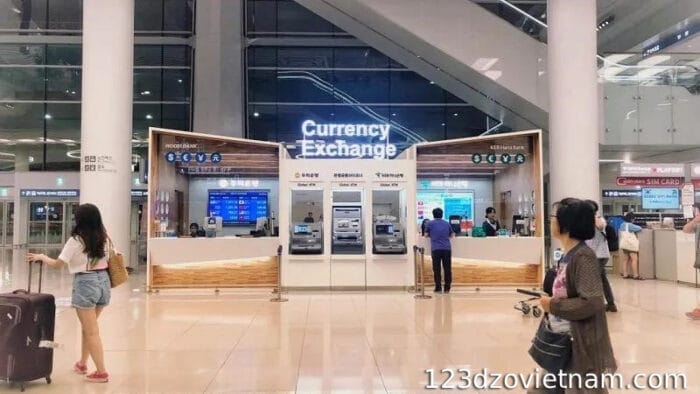
At the airport: I only exchange about 50–100 AUD immediately upon landing. This amount is sufficient to purchase a 4G SIM card and cover transportation costs to the city center. Avoid exchanging your entire sum here, as airport exchange rates are typically 2–3% lower than those found in the city.
In the city center: I always prioritize visiting major banks (such as Vietcombank or Techcombank) or licensed, legitimate currency exchange counters. At these locations, exchange rates are publicly displayed and transparent, and you will be provided with a clear transaction receipt, offering complete peace of mind regarding the legality and authenticity of the banknotes you receive.
A note on gold shops and the black market: Although the exchange rates offered there may be slightly higher, such activities are currently subject to strict enforcement and are prohibited by law. To avoid legal risks or the possibility of receiving counterfeit currency, I strongly recommend opting for official, legitimate channels instead.
#2. Using cards and ATMs while traveling
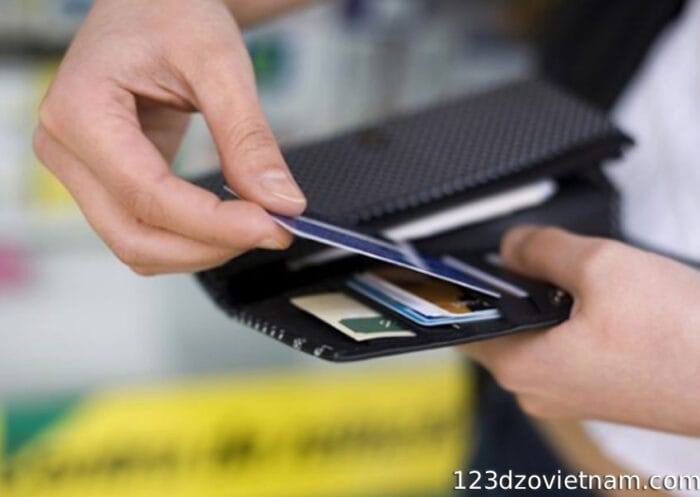
If you have a question mark about whether or not to use an ATM card when traveling in Vietnam, the answer is yes. In addition to using cash, contactless payment methods and ATM withdrawals are incredibly convenient solutions that I frequently utilize to lighten the load on my wallet.
Using cards and ATMs while traveling
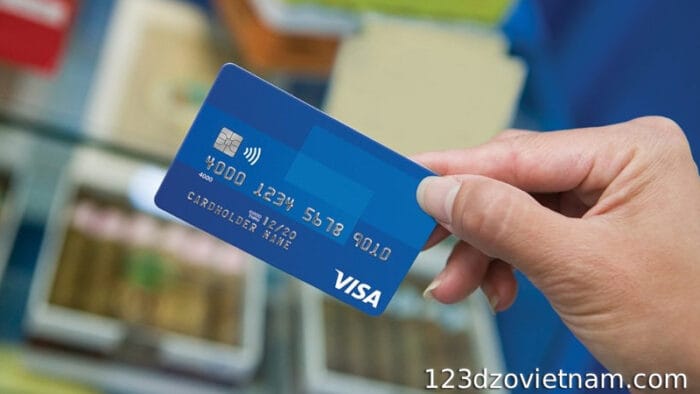
In major cities such as Hanoi, Ho Chi Minh City, and Da Nang, card payments (Visa, Mastercard) have become extremely common. You can easily make payments at restaurants, supermarkets, and shopping malls without needing to carry around excessive amounts of cash.
Note on ATM withdrawal fees: Most ATMs in Vietnam charge a fee ranging from 20,000 to 100,000 VND per transaction (equivalent to approximately 1.2 – 6 AUD). Additionally, your home bank may impose extra foreign currency conversion fees, so be sure to check carefully before you travel to avoid incurring double charges.
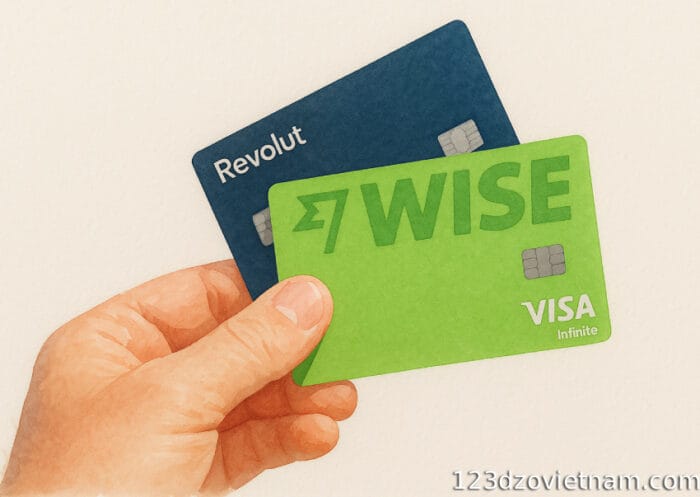
Cost-saving tip: I typically prioritize using travel-specific cards, such as Wise or Revolut. These cards not only offer the most favorable, near-real-time exchange rates but also allow for fee-free ATM cash withdrawals up to a certain limit—helping me save a considerable amount to spend on dining experiences or shopping instead.
#3. Practical information on AUD and VND
Getting accustomed to a new currency with as many zeros as the VND can be a bit confusing; therefore, keep the following key points in mind to ensure your expense calculations remain accurate and efficient:
Practical information on AUD and VND
Currency
Characteristic
Reference Exchange Rate
1 AUD is approximately 16,500-17,000 VND (depending on the time).
Quick Calculation Method
I usually quickly calculate that 10 AUD is roughly 170,000 VND.
VND Denomination
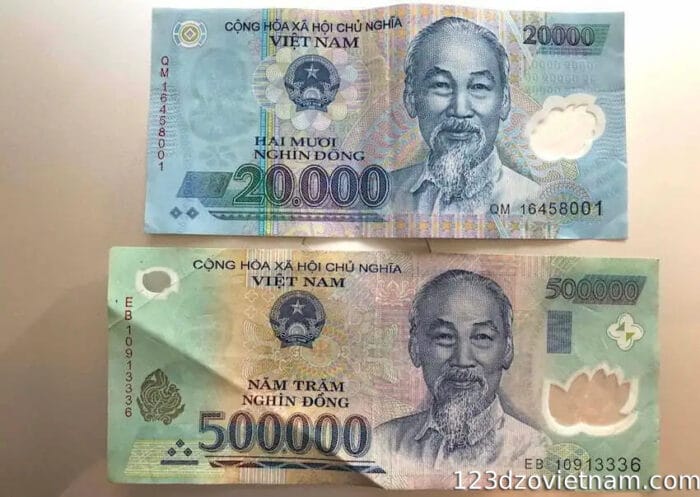
Vietnamese currency features a lot of zeros. Be careful to distinguish between the 20,000 VND note (light green) and the 500,000 VND note (dark green), as they are easily confused in dim lighting.
In addition to the advice “Is it better to exchange money in Vietnam?“, my recommendation is to ensure your foreign banknotes are in pristine condition. A 50 AUD note with a torn corner or ink stains may be refused by banks or subject to a very high exchange fee. Always keep your money flat and clean throughout your trip.
03 Solutions for managing money when traveling in Vietnam
To ensure my journey through Vietnam always runs smoothly, without the headache of wondering whether I should exchange money before I travel to Vietnam, I typically employ a flexible combination of cash and international payment cards. Below are three “hard-earned” strategies I consistently apply to both save money and ensure absolute security:
#1. Combine cash and cards when traveling
In reality, even though Vietnam’s major cities have become highly modernized, cash remains the preferred method of payment at street food stalls, local markets, and when taking traditional taxis. For this reason, I always keep a certain amount of Vietnamese Dong (VND) cash on hand to cover small expenses.
Combine cash and cards when traveling
In parallel, for larger bills, such as those incurred at luxury hotels, upscale restaurants, or shopping malls, I prioritize using a card to enjoy the benefits of both convenience and security.
I typically allocate my budget according to a 30/70 rule: 30% in cash for small, incidental expenses, and 70% on my card for major services. For instance, when grabbing a bowl of Pho at a long-standing street-side stall or picking up a souvenir at Dong Xuan Market, I use cash. When settling a hotel bill for a three-night stay, I use my card to ensure both security and a clear transaction record.
#2. Prioritize specialized international cards (Wise/Revolut)
Instead of relying on standard bank credit cards, which often come with steep foreign currency conversion fees, I typically opt for travel-specific cards such as Wise or Revolut. These serve as invaluable tools, enabling me to access exchange rates that closely mirror actual market rates (more favorable than the rates found at airport currency exchange counters).
Prioritize specialized international cards (Wise/Revolut)
A friend of mine used a standard bank card to pay a bill of 200 AUD, only to be charged an additional currency conversion fee of nearly 3% by their bank (needlessly losing an extra 6 AUD). In contrast, I used my Wise card to pay the same amount and incurred a fee of less than 0.5 AUD, benefiting from an exchange rate that was extremely close to the real market rate.
#3. Using ATMs as an emergency backup option
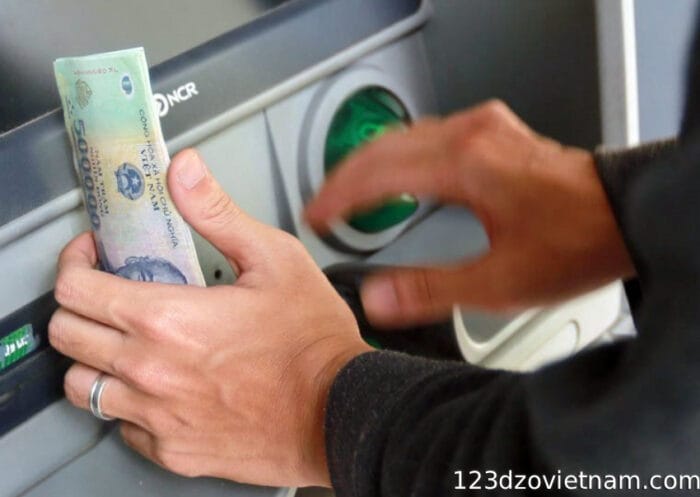
In situations where I urgently need extra cash but am not near any authorized currency exchange bureaus, I opt to withdraw money directly from ATMs displaying the Visa or Mastercard logo.
Using ATMs as an emergency backup option
Although this solution typically entails a transaction fee ranging from 20,000 to 100,000 VND (approximately 1.2 to 6 AUD) per withdrawal, it remains the safest method for me to obtain immediate Vietnamese currency without having to carry excessive amounts of foreign cash on my person. Furthermore, there is no need to worry about are atms safe in Vietnam.
While in Hoi An, eager to take a basket boat tour but having run out of Vietnamese Dong cash, I sought out a nearby TPBank or HSBC ATM to withdraw an additional 2 million VND. Although I incurred a fee of approximately 50,000 VND (roughly 3 AUD), I had immediate access to cash, without the hassle of having to track down a bank branch.
A handy tip I follow is to withdraw a large sum in a single transaction to optimize against this fixed fee, rather than making multiple small withdrawals. For safety reasons, you should opt for ATMs belonging to major banks or those located in bustling, well-populated areas equipped with security cameras.
I typically withdraw the maximum allowable limit in one go, for instance, 2 or 3 million VND, depending on the specific machine, so that I only have to pay the transaction fee a single time, thereby avoiding the unnecessary costs associated with making numerous small, sporadic withdrawals.
Conclusion
So, is it better to exchange money in Vietnam? Exchanging your currency directly in Vietnam is the optimal choice, allowing you to secure the best exchange rates and avoid the expensive conversion fees often charged back home. By simply maintaining a bit of flexibility, you can take full control of your spending and enjoy your journey to the fullest, in the most cost-effective way possible.